
OURVARは審判の判定を「誤り」と分析しました。あなたが投票するのは、OURVARの分析が正しいかどうかです。審判への投票ではありません。
OURVARの判定に同意しますか?
すべての投票がOURVARの精度向上に役立っています — そのご協力に心より感謝します。AIは完璧ではなく、皆さんの判定こそがケースごとの改善につながります。私たちが求めるVARを、一緒に作り上げていきましょう。🙏
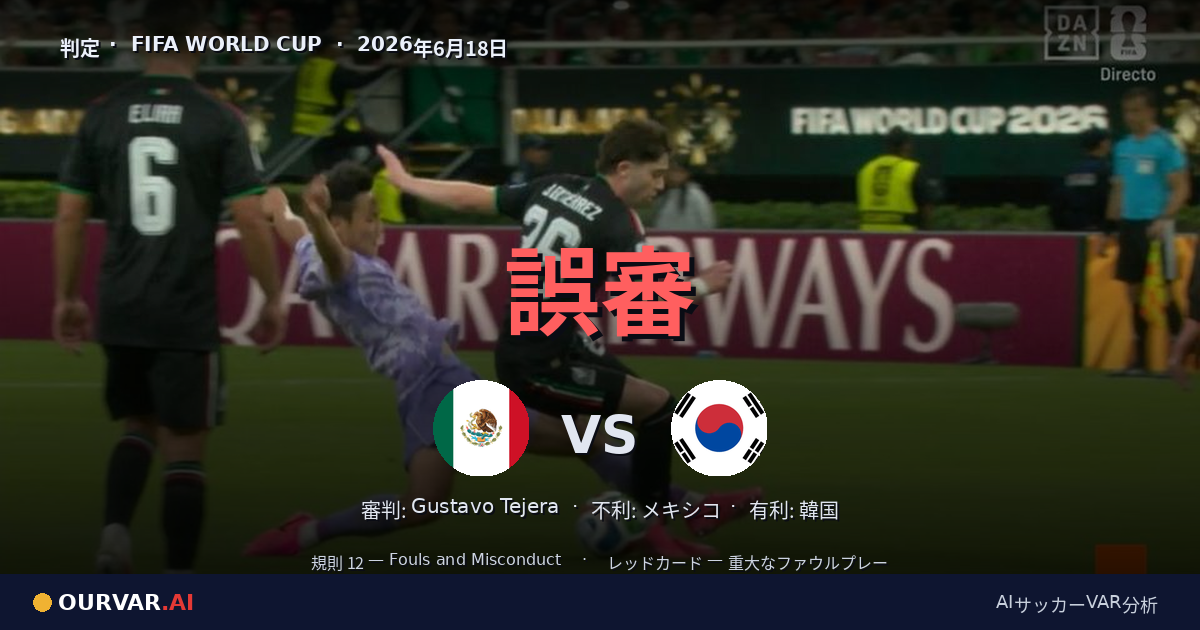
A South Korea player (identified in the context as Paik Seung-ho, in purple) slid in on Mexico's #26 with both legs in a scissors motion, clamping around the lower legs and ankles rather than connecting cleanly with the ball. The frames show the ball already separated from the contact zone by the time the legs lock around the Mexico player's ankles, and the follow-through creates visible torque on the ankle joint. Under IFAB Law 12, a scissors challenge that makes player-not-ball contact and bends an opponent's ankle joint crosses from reckless (yellow) into serious foul play that endangers the safety of the opponent (red). The referee showed a yellow card, which is an understatement of the severity — this challenge meets the red-card threshold for serious foul play, and at a FIFA World Cup match where FIFA's own briefings emphasise strict application of these criteria, the yellow card was the wrong call.
OURVARの完全分析を読む
重要ポイント、引用されたIFAB競技規則、判定に至るまでのフレーム毎の解説をすべて見るには登録してください。
- AIの判定を導いた重要ポイント
- IFAB規則の完全引用 + フレーム参照
- 投票、コメント、他のファンと議論
OURVARに質問
この判定について質問はありますか?
判定に異議を唱えよう。OURVARに「なぜ?」「肘の角度は?」「前例は?」と質問し、ケースを分析した同じモデルからIFAB規則に基づいた回答を受け取れます。Pro 25/月 · WC 50 · GB 150.


ディスカッション