
OURVAR가 심판의 판정을 분석했습니다: 정확. 지금 투표는 심판이 아닌 OURVAR의 분석이 옳은지에 대한 것입니다.
OURVAR의 판정에 동의하시나요?
모든 투표는 OURVAR의 정확도를 높이는 데 도움이 됩니다 — 그리고 저희는 진심으로 감사드립니다. AI는 완벽하지 않으며, 여러분의 판단이 바로 사례 하나하나를 개선하는 원동력입니다. 우리 모두가 원하는 VAR을 함께 만들어가고 있습니다. 🙏
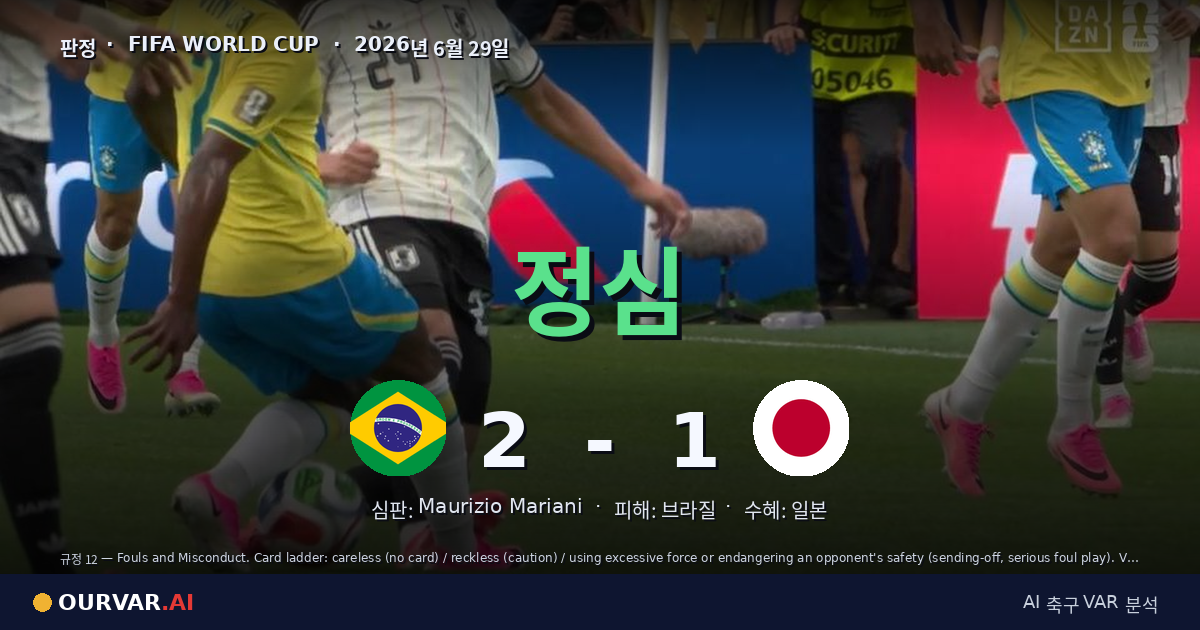
Japan's #24 caught Vinicius with a studs-involved challenge near the touchline. The referee showed a yellow card, and VAR checked for serious foul play but did not intervene, so the yellow stood. Some analysts argued for a straight red, citing studs into the ankle and the joint bending under force. The decision is defensible — and, crucially, VAR was right to stay out. Under Law 12 the difference between a yellow and a red here is force and safety-endangerment: a reckless challenge is a caution, while excessive force or endangering an opponent's safety is a red. The challenge is at least reckless (clear yellow). Whether it crosses into serious foul play depends entirely on whether the studs were planted into the ankle and twisted the joint under force — a genuinely arguable, borderline judgment. And that is exactly the point: VAR's role is not to pick the better call but to correct clear and obvious errors. A challenge the referee saw live and judged reckless, sitting in a real yellow/red grey zone, is by definition not a clear and obvious error — so VAR correctly declined to upgrade it. CORRECT DECISION, MEDIUM confidence. The one thing that would flip this to a red (and make the yellow an undercall) is clear replay evidence of the studs digging in and bending the ankle under force.
OURVAR의 전체 분석 보기
모든 핵심 요인, 인용된 IFAB 법령 조항, 그리고 이 판정에 이른 프레임별 추론을 보려면 가입하세요.
- AI 판정을 이끈 핵심 요인
- 전체 IFAB 법령 인용 + 프레임 참조
- 투표, 댓글, 다른 팬과 토론
OURVAR에게 묻기
이 판정에 관해 궁금한 점이 있나요?
판정에 의문을 제기하세요. "왜?", "팔꿈치 각도는?", "전례는?"을 OURVAR에 물어보고 — 사건을 분석한 동일한 모델로부터 IFAB 규정에 근거한 답을 받으세요. Pro 25/월 · WC 50 · GB 150.


토론