
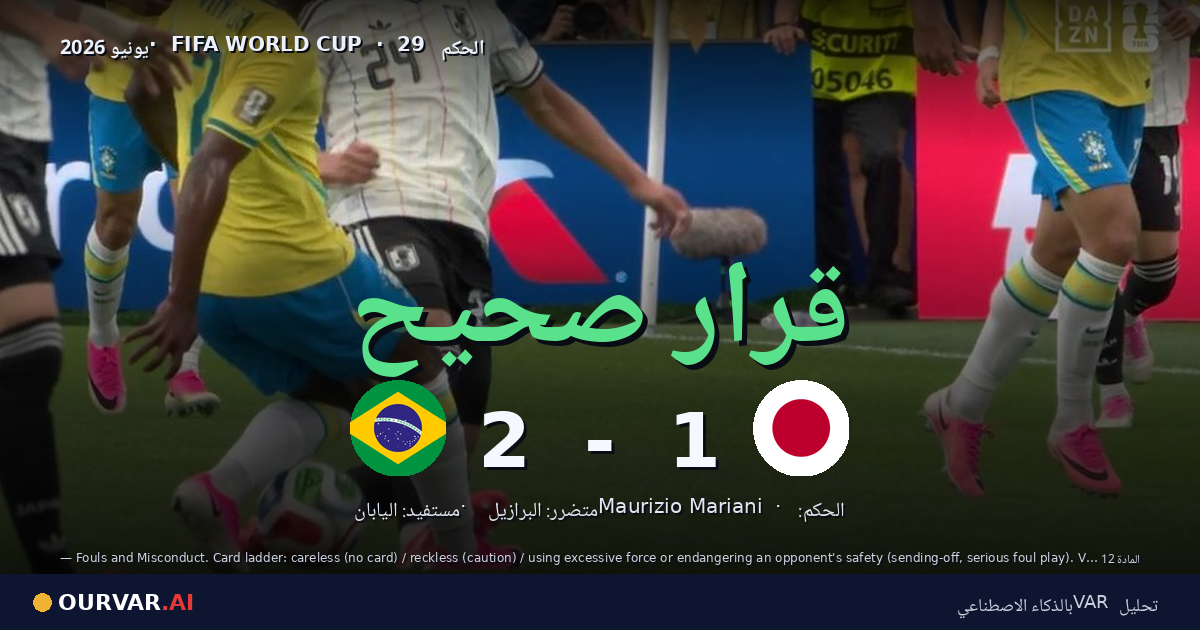
حكم OURVAR على قرار الحكم: صحيح. أنت تصوّت على مدى صحة تحليل OURVAR — وليس على الحكم.
هل توافق على حكم OURVAR؟
كل تصويت يساعد على تحسين دقة OURVAR — ونحن ممتنون لذلك. الـ AI ليس معصومًا من الخطأ، وحكمك هو بالضبط ما يُطوّره، حالةً تلو الأخرى. أنت تساهم في بناء الـ VAR الذي نستحقه جميعًا. 🙏
Japan's #24 caught Vinicius with a studs-involved challenge near the touchline. The referee showed a yellow card, and VAR checked for serious foul play but did not intervene, so the yellow stood. Some analysts argued for a straight red, citing studs into the ankle and the joint bending under force. The decision is defensible — and, crucially, VAR was right to stay out. Under Law 12 the difference between a yellow and a red here is force and safety-endangerment: a reckless challenge is a caution, while excessive force or endangering an opponent's safety is a red. The challenge is at least reckless (clear yellow). Whether it crosses into serious foul play depends entirely on whether the studs were planted into the ankle and twisted the joint under force — a genuinely arguable, borderline judgment. And that is exactly the point: VAR's role is not to pick the better call but to correct clear and obvious errors. A challenge the referee saw live and judged reckless, sitting in a real yellow/red grey zone, is by definition not a clear and obvious error — so VAR correctly declined to upgrade it. CORRECT DECISION, MEDIUM confidence. The one thing that would flip this to a red (and make the yellow an undercall) is clear replay evidence of the studs digging in and bending the ankle under force.
اقرأ تحليل OURVAR الكامل
سجّل لرؤية كل نقطة أساسية، وبنود قوانين IFAB المُستشهد بها، والتحليل لقطة بلقطة وراء هذا الحكم.
- النقاط الأساسية التي قادت قرار الذكاء الاصطناعي
- اقتباسات كاملة من قوانين IFAB + إشارات إلى اللقطات
- صوّت وعلّق وناقش مع جماهير آخرين
اسأل OURVAR
هل لديك سؤال حول هذا الحكم؟
تحدَّ القرار. اسأل OURVAR "لماذا؟"، "ماذا عن زاوية المرفق؟"، "ما السابقة؟" — واحصل على إجابات مستندة إلى قوانين الـIFAB من النموذج نفسه الذي حلّل الحالة. Pro 25/شهر · WC 50 · GB 150.


النقاش